Bible Studies for Life Devotional originally published here at the Biblical Recorder

Focal Passage: Exodus 14:27-29; 15:22-27

Have you ever wondered what it would be like if you were in the Bible? Maybe you put yourself in the place of a disciple walking with Jesus? Or maybe an Old Testament hero like Moses or David or Daniel? At times I’ve wondered what it would be like to have existed in one of the Bible stories. There is actually a place for us in the Bible although it’s not very flattering. Truth be told, we are much like the people of Israel. Israel had just witnessed God sending plagues upon Egypt—ten of them. Israel had walked across the Red Sea on dry land. Israel had watched as God destroyed the Egyptian army with walls of Red Sea water. Even after those miraculous acts, Israel grumbled and complained faithlessly when they found a pool of bitter water in the wilderness. At Marah, Israel tested the Lord. Aren’t we much the same? We have been redeemed, protected, and provided for by God only to faithlessly grumble when something doesn’t go our way. If we find ourselves in the Bible, we are not the heroes, but the sinners. That is the point. Years later Jesus would face a similar situation to the people of Israel. He was also in the wilderness. Satan tempted Jesus to jump off the temple and show off God’s protection. Jesus replied, “Do not test the Lord, your God.” Jesus referenced the very text where Israel tested the Lord. They failed to trust God. We’ve done what they did. And that is why Jesus came, faced temptation, succeeded and ultimately went to the cross. We cannot obey our way into wholeness. We will never deserve the healing we need. But the healing and provision we need is available. It is available because Jesus refused to test the Lord, because Jesus obeyed perfectly when we disobeyed, because Jesus substituted his wholeness for our lack. Will you trust the perfect, risen Lord for your healing?
Originally published at the Biblical Recorder.

Bible Studies for Life lesson for March 4, 2018

Focal Passage: Genesis 22:1-14

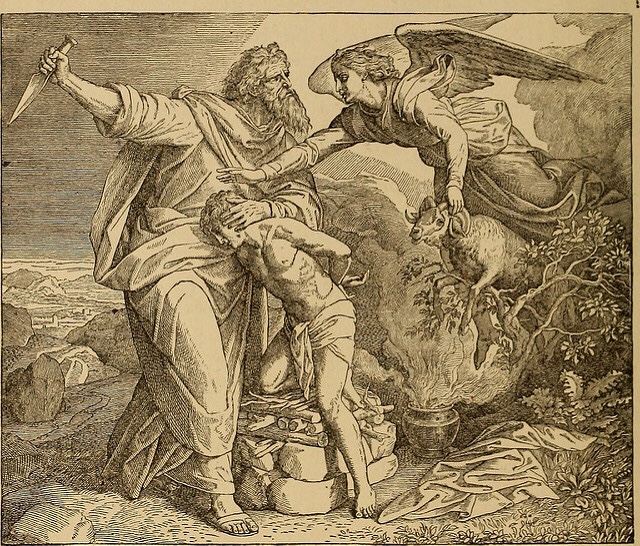
Felt needs are important. We work in order to earn money to provide shelter, food, and clothing. Day to day we are hungry, thirsty, tired, frustrated, disappointed, discouraged, etc. and act to meet those needs. Sometimes, our felt needs can overwhelm us. In our text, Isaac said, “We have the fire and the wood, but where is the lamb for the burnt offering?” Abraham and Isaac had a need—a need they felt. Abraham responded, “God will provide.” Do you have Abraham’s kind of faith in God’s provision? Søren Kierkegaard, a Dutch philosopher/theologian of the 19th century, famously interpreted Abraham’s’ faith in this text as a “blind leap.” In Kierkegaard’s estimation, Abraham closed his eyes, stepped out, and happily landed in a place of God’s provision. I believe Kierkegaard’s claim is glaringly wrong. Abraham’s faith in God’s provision was anything but blind. God led Abraham, forgave Abraham, cared for Abraham, and gave Abraham and Sarah a child far after their days of childbearing were past. Abraham’s faith in God’s provision was based on years of God demonstrating his faithfulness. In that desperately poignant moment when Isaac was tied down on the altar, Abraham trusted God to the point of obedience. Then God stopped him and showed him a ram caught in a thicket. This story teaches us two things about God’s provision. First, there is nothing we can sacrifice, give, or do to earn God’s provision. When God stopped Abraham, he did not send him home. It is important that we see that Abraham and Isaac still sacrificed, still worshiped. God provided them to a ram to sacrifice so they could worship God. Second, we access God’s provision through faith. It was Abraham’s faith in God that led him to obey. If we want to experience God’s provision, we must have faith. God has already provided on the grandest of scales. He gave us just what we needed when he sent Christ to the cross. We access his provision by faith. And when we believe in the provision of God through Christ, we have a basis for trusting God to provide our felt needs as well (Romans 8:32).